



Updated November 27, 2025
My name is Joshua Chacon (last name pronounced Chacone) and I own Self Defense Products LLC.com. I want to be transparent from the start. A lot of folks in this industry are going to be pissed off at me at me for posting this. I understand this but I’m sick and tired of these voltage claims. Its actually embarrassing at times when they ask me if they really have this many volts and when I say no they just walk away like im selling them snake oil. I still have to say it because I cannot sell these products with a straight face and pretend these crazy voltage numbers make sense.
Just so nobody gets it twisted. This is my personal opinion. I am not an electrician or an electrical engineer and I am not pretending to be one. I am a regular guy with common sense who has been around self defense products since the late eighties and early nineties. I have seen these numbers climb higher and higher and it finally reached a point where I could not ignore it anymore.
When I first started seeing stun guns for sale, the voltage numbers were lower compared to today. You would see fifty thousand volts, then one hundred thousand then it went up to eight hundred volts for a while and just stayed at eight hundred thousand for years. Then they came in curved style or it had a rubber grip. But the highest voltage stayed at eight hundred thousand volts. Then lithium ion batteries came out and then manufactured started putting the stun gun prongs closer so the crackling of the arc was louder and faster. So I dont want to get ahead of myself lets keep focused on the voltages. After a while the numbers jumped into the millions. One million volts. Ten million. Twenty million. Fifty million. I have even seen ninety five million volts printed on a small pocket stun gun box.
If you have been around this business for any length of time you know what I mean. It starts like a fish story. Somebody prints a big number and it sells. The next company prints a bigger number. Nobody wants to be the small number on the shelf so the game keeps going. Before you know it the numbers look more like a comic book than a real product spec. You see this in the diesel engines now towing over thirty eight thousand pounds and motor oil lasting over fifteen thousand miles between oil changes instead of every three thousand miles. But that’s another topic about planned obsolesce at another time on a different platform.
At some point you have to stop and ask a basic question. If this little pocket stun gun really pushed ninety five million volts the way the average person imagines voltage, would you be holding it in your hand for nineteen bucks? Or would you be lighting up a whole fence line and knocking out breakers on your street? Common sense says something is off.
I want to keep this simple. Voltage is the push that lets a spark jump a gap. That is all. In a stun gun, you need enough voltage to jump through air, light clothing, and the surface of the skin. Once you have enough to do that, you have passed the real world test. The rest of the extra voltage printed on the box is mainly for marketing.
Engineers argue about exact numbers, air pressure, humidity, and all that. I am not going to drag you into that fight. Here is the practical way to think about it. If you can see and hear a strong arc jumping between the probes and it can reach through a bit of clothing, you are already in the range that works in real life. You do not need billions of volts for that. You need a solid design with enough voltage to start the arc and a safe current level behind it.
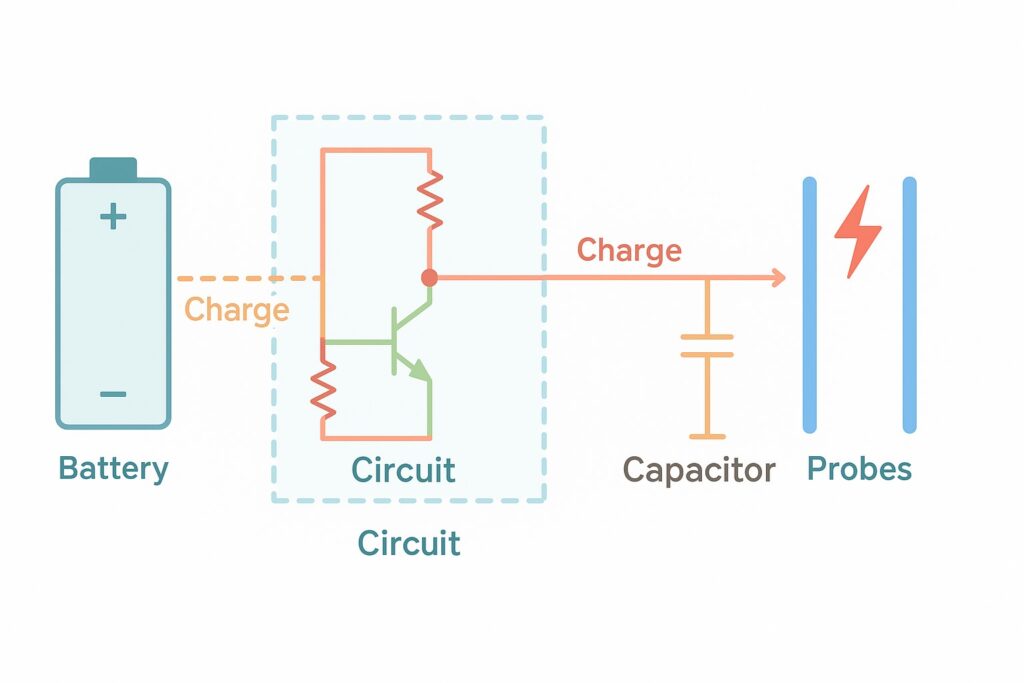
If you opened most modern stun guns, you would not see magic. You would see a few basic parts working together.
Voltage gets the spark started. Current is what your muscles feel. Current is measured in amps. Because a full amp would be far too much, stun guns are rated in milliamps. One milliamp is one thousandth of an amp.
The human body reacts much more strongly to changes in current than to the size of the voltage number on a package. That is why responsible civilian stun guns keep the current in a low, non lethal range but still high enough to create strong pain and muscle reactions.
Here is a simple way to picture it in normal language:
Most civilian stun guns are built to stay under about 5 milliamps. That is an engineering choice so the device stays effective but does not cross into dangerous territory or burn up its own components. Law enforcement conducted energy weapons like TASER devices use different pulse patterns and are designed for a different job, so you cannot compare them based on one number alone.

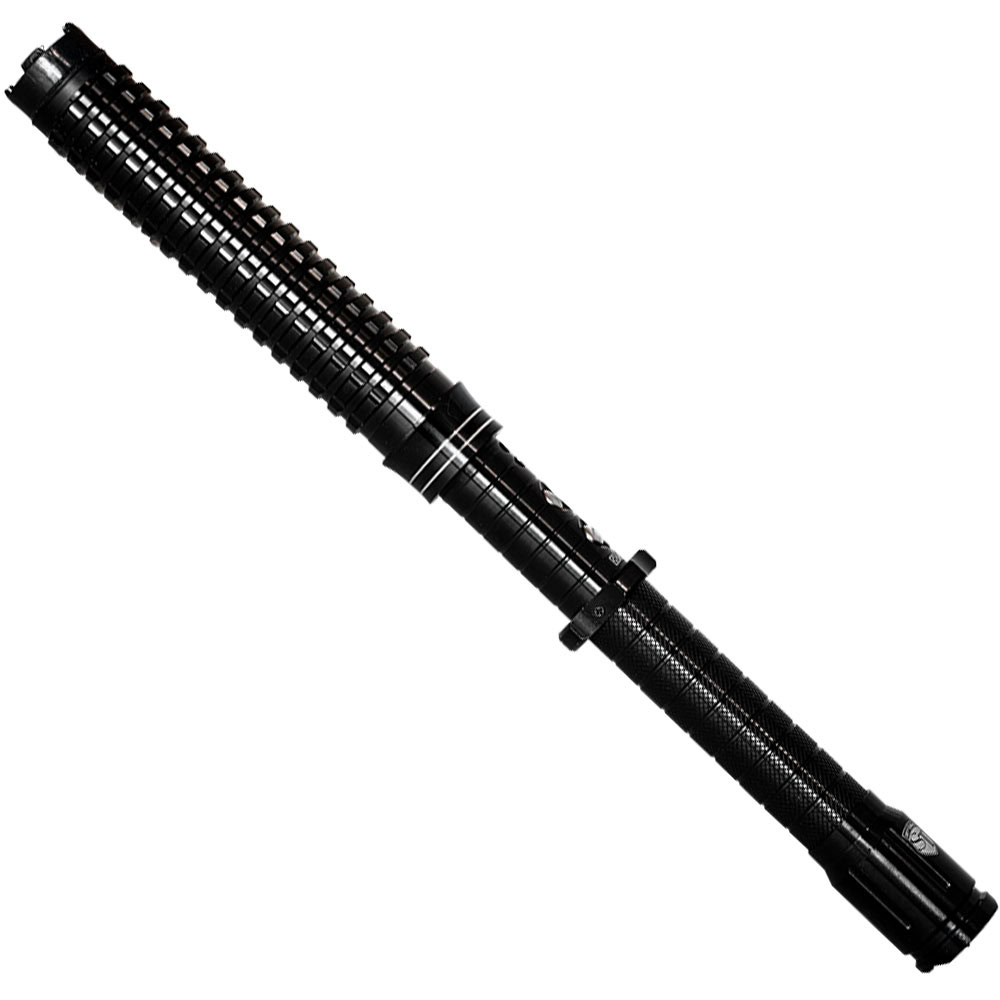

Instead of chasing made up voltage numbers, I pay attention to devices that list realistic milliamp ranges and are built for real life carry. Here are three examples from my own store that focus on usable power, not hype:
These are examples of what I consider honest, high performing civilian units. The milliamp range is strong enough to matter but still designed for non lethal personal defense.
You may see the word coulomb when you dig into deeper technical pages. You do not need to become an engineer but it helps to know the basics. A coulomb is a unit of total electric charge. You can think of it as how much current flows over a short slice of time.
If current in milliamps tells you how strong each pulse is at a given moment, coulombs describe how much total charge is delivered over that pulse. That is why some experts say a device with around one microcoulomb of delivered charge is very painful and anything above that range is intolerable. Different people and different body parts react differently, but that gives you a rough idea of how engineers look at it.
You do not need to see coulomb ratings on a package to make a decision, but it is helpful to know that there is more behind the scenes than a single voltage print on a box.
This is the part where I am going to make a few people mad that sell what I sell. If I don’t be the whistleblower then who is going to fill my shoes? A lot of the voltage numbers in this industry are not real world measurements. Some are open circuit readings that do not match what happens when the device is pressed against a person. Some are copied from another company without testing. Some are simply made up because a bigger number looks impressive on a shelf.
Most sellers do not have the tools to measure true output under load and many do not even ask the factory for honest test reports. Boxes get printed, numbers get repeated, and customers are left trying to compare devices based on values that are not grounded in reality.
I work with trusted factories and I can control what I say about the products I carry. That is why you will hear me talk more about build quality, milliamp ranges, safety features, and real world use instead of chasing giant voltage claims. I saw this guy at the flea market saying that his stun guns are higher voltage than mine with conviction. I asked him kindly to leave my booth because he was making a scene with my customers. I actually felt bad for the guy because he was in la la land.
When you look at a stun gun, try to ignore the wild voltage number for a moment and focus on things that actually affect your safety.
When you combine all of that with a realistic milliamp range and a good physical design, you end up with a tool you can actually trust.
The voltage print on a stun gun package does not decide what you are allowed to carry. Your state and local laws do. Some places treat stun guns like regular self defense tools. Others have age limits, location limits, or extra rules for certain people and situations.
I keep a separate guide that I update as laws change so you have a starting point. Before you buy or carry a stun gun, take a few minutes to read it and then double check anything that affects your situation.
Stun Gun Laws By State: 2025 Legal Guide
This page will not replace local legal advice, but it will give you a clear overview so you are not guessing based on rumors or old information.
I cannot control what factories and competitors print on their boxes, but I can control how honest I am with my customers. You will still see crazy voltage claims in this industry. I will not pretend that ninety five million volts on a pocket stun gun is a real world measurement. I would rather tell you the truth and let you make an informed choice.
If I ever built my own stun gun from scratch I would not put big voltage numbers on the package at all. I would talk about milliamp ranges, build quality, pulse design, and how to carry it safely. That is what actually matters when you are walking to your car at night or closing a store by yourself.
If you take one thing from this page, let it be this. Voltage helps the spark jump the gap. Current and pulse design do the work. Honesty and good information protect people better than any made up number ever will.
Thank you for trusting us with your safety.
Q: Do higher volts mean a stronger stun gun?
A: No. Voltage just helps the spark jump the gap. Once a stun gun can arc through clothing and skin, extra voltage printed on a box does not change how it feels. Current and pulse design create the actual effect.
Q: How many volts does a stun gun really need?
A: Only enough to jump a small air gap. Most real stun guns work in the tens of thousands of volts, not millions. Anything past that is mostly marketing, not real world output under load.
Q: What actually makes a stun gun powerful?
A: Milliamps. Around 1 milliamp is a sharp tingle. Around 2 to 3 milliamps is strong pain and muscle tightening. Around 3 to 5 milliamps is the range most civilian stun guns stay in for effective, non lethal protection.
Q: Why do some stun guns claim 50 million or 95 million volts?
A: Because it sells. Many of those numbers are open circuit readings, copied claims, or just marketing. They do not reflect what the device produces when pressed against a person.
Q: Does more current mean more danger?
A: Current is controlled on purpose. Civilian stun guns stay under about 5 milliamps so they can create strong pain and muscle confusion without causing permanent injury. That is a safety by design choice.
Q: Can I compare a stun gun to the medical paddles doctors use on TV?
A: No. Medical defibrillators use high energy joules to reset a heart rhythm. A pocket stun gun uses short pulses and low current for pain and temporary muscle lock up. They are completely different devices.
Q: Do stun guns work through jackets or hoodies?
A: Yes, as long as the arc can jump the distance. If you can see and hear a strong spark between the prongs, you already have enough voltage for real world clothing.
Q: Are stun guns legal where I live?
A: Most states allow civilian stun guns, but some have age limits, location rules, or restrictions based on your situation. Always check your state laws before carrying one. Stun Gun Laws By State
Q: How often should I charge my stun gun?
A: Charge it every 30 to 60 days so the battery stays ready. If you carry daily or keep it in a cold vehicle, check it a little more often.
Q: What should I look for when buying a stun gun?
A: Real milliamp ratings, a strong body, a safe grip, easy to use switches, rechargeable power, and honest information. Ignore the giant voltage numbers. They do not tell you anything about real performance.

