





Picking a knife for beginners does not have to be complicated. Buying your first knife feels bigger than it should, with a hundred options, a lot of loud opinions, and plenty of folks online trying to sell you the priciest thing they can. This is my simple guide, and I am going to cut through all of it for you.
I have helped people pick self defense tools since the early 90s. My background is in counseling. I spent years working with folks who needed real help, not a sales pitch. That is the same way I want to walk you through this. No pressure. Just what matters.
Here we go, one step at a time.
Step 1: Match the Knife to Your Life
Start with a simple question. Where will you actually carry it? Your answer decides everything else.
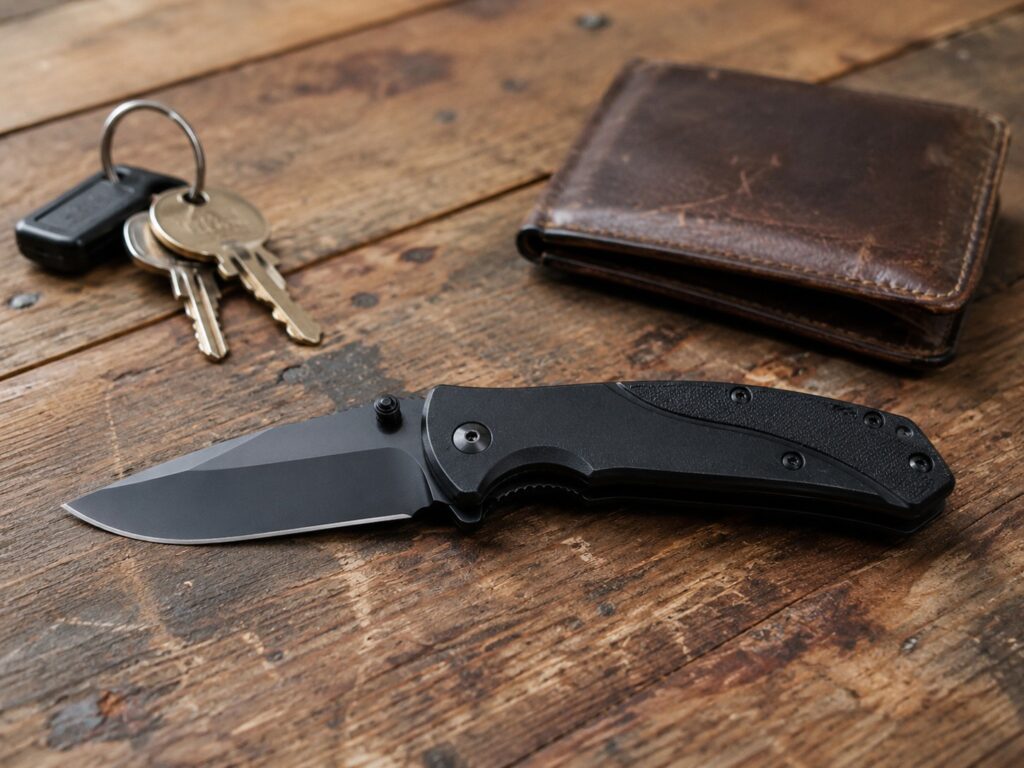
A knife for pocket carry needs to be small and light. A knife that lives in a bag can be bigger. If you dress up for work, you want something that hides clean. If you spend your time outdoors, you want something tough that handles real tasks.
The knife you pick has to fit the life you already live. That is the whole first step.
Step 2: Pick Your Opening Style Knife for Beginners
How a knife opens is a big deal when your heart is pounding. Here are your main choices.
- Assisted open folder. You push the blade with your thumb and a spring finishes the job. Fast, simple, and beginner friendly. This is where I point most new people.
- Manual folder. You open it fully by hand. Cheaper and legal in more places, though slower to get out.
- Automatic or OTF. A button sends the blade out on its own. Very fast. Restricted in a lot of places, so check your laws first.
If you are brand new, an assisted open folder is the easiest knife for beginners to run. It gives you speed without the legal headaches that come with automatics.
Step 3: Get the Right Size Knife for Beginners
Bigger is not better. A blade that is too long gets awkward to carry and can cross legal limits where you live.
For everyday carry, a blade in the three to four inch range fits most people. It is big enough to be useful and small enough to carry all day without thinking about it. Check your local limit before you commit, since some places cap blade length lower than you would guess.
Step 4: Check the Handle and Grip
This is the part beginners skip and old timers never do. The handle is where a knife lives or dies.
You want texture. You want a shape your hand locks into. Picture your palm sweaty or cold, because that is exactly when you will reach for it. A slick handle in a real moment is a knife you can lose control of.
If you can, hold it before you carry it. Your hand will tell you fast.
Step 5: Know Your Local Laws
I put this near the end, but it might be the most important step of all. Knife laws vary by state and city. Blade length, open versus concealed carry, and automatic rules are not the same everywhere.
Do not guess. Do not trust a random forum post. Read the real rules for where you live. I keep a full state by state breakdown on the knife laws by state page. Read your state and city before you buy anything.
Step 6: What a Knife for Beginners Should Cost
You do not need to spend a fortune. You also should not grab the cheapest thing on the shelf and trust your safety to it.
A solid everyday folder sits in a fair middle range. Spend enough to get a blade that holds an edge and a lock that stays locked. Past that, you are mostly paying for a name and some flash.
The rule I live by is simple. Buy the knife you will carry every day. A cheap knife in your pocket beats an expensive one you left at home.
Your Knife for Beginners Checklist
Here is your checklist. Fits your daily carry. Opens fast and legal. Right size for your area. A handle your hand locks into. Legal where you live. Priced fair.
Hit those six and you made a smart call.
Once you know what you want, the bigger picture on types and carry lives in my guide to self defense knives. When you are ready to see real options, my self defense knives category page has the full lineup I stand behind.
We have been helping customers since 2008, and every order is backed by our 90-day refund guarantee. Take your time. The right knife for beginners is the one you will still be carrying a year from now.
Frequently Asked Questions
What is the best knife for beginners?
For most people, an assisted open folding knife is the best knife for beginners. Start with where you will carry it, keep the blade in the three to four inch range, make sure the handle grips well, and check your local laws before you buy.
How much should a beginner spend on a self defense knife?
You do not need to spend a fortune. A solid everyday folder in a fair middle range gets you a blade that holds an edge and a lock that stays locked. The best knife is the one you will actually carry every day.
What matters most when choosing a self defense knife?
Carrying it every day matters more than any single feature. A knife you can reach fast, open without thinking, and hold onto under stress beats a fancy blade that stays home.
Thank you for trusting us with your safety.

