









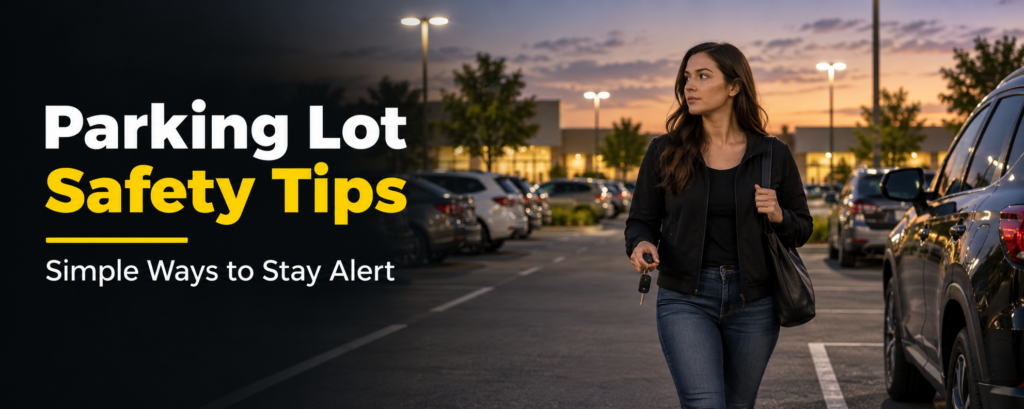
Parking lots are familiar places, which can make it easy to move through them on autopilot. A few simple parking lot safety tips can help you stay aware while walking to your vehicle, loading groceries, leaving work, or returning to your car after dark.
The goal is not to feel afraid every time you park. It is to reduce distractions, notice your surroundings, and have a simple plan when something does not feel right.
Quick Parking Lot Safety Checklist
- Choose a visible, well-lit parking space when possible.
- Put your phone away before you start walking.
- Have your keys ready before you reach your vehicle.
- Walk with purpose and keep looking around you.
- Check around and inside your vehicle before getting in.
- Lock the doors after you enter.
- Return to the building or ask for help if something feels wrong.
Choose Your Parking Space With the Return Trip in Mind
When you arrive, think about what the area may be like when you return. A space that looks convenient in daylight may feel different after sunset or after nearby businesses close.
When possible, park where lighting is working and where other people can see the area. Avoid parking beside large vehicles, thick landscaping, poorly lit corners, or anything else that limits your view as you approach your car.
Notice a landmark, row number, or nearby sign so you can return directly instead of wandering while looking for your vehicle.
Get Ready Before You Leave the Building
Take a moment near the exit to get organized. Put away receipts, check your route to the car, and have your keys in hand. If you are carrying bags, arrange them so one hand remains as free as possible.
This is also a good time to look through the window or doorway. If the area feels uncomfortable, wait inside, leave with another person, or ask an employee or security officer whether an escort is available.
These habits are part of broader personal safety awareness: notice what is around you before you step into it.
Keep Your Attention on the Parking Lot
A phone can pull your eyes and attention away from your surroundings. Finish your message or call before you start walking, then put the phone somewhere accessible without looking down at it.
Keep music low or remove an earbud so you can hear vehicles, people, carts, alarms, and other sounds around you. Walk at a steady pace with your head up. You do not need to stare at anyone. Simply keep scanning the area ahead, beside, and behind you.
Use marked walkways and crosswalks where they are available. Drivers may be backing out, looking for spaces, or watching traffic instead of watching for pedestrians.
Approach Your Vehicle Carefully
As you get close, look around the vehicle and glance into the back seat before opening the door. Notice whether someone is standing nearby or whether another vehicle is positioned in a way that makes it difficult to enter.
If something looks wrong, keep moving toward a populated place instead of stopping beside the car. You can return when you have help or when the situation has changed.
Unlock only the door you need if your vehicle allows it. Once inside, close the door, lock it, and get settled before checking messages or entering a destination.
Be Extra Deliberate When Loading Bags or Children
Loading groceries, packages, mobility equipment, or children naturally divides your attention. Before you open the trunk or a rear door, take a quick look around.
Keep your keys and phone on you instead of setting them inside the trunk or on a seat. Load what you can efficiently, return the cart to an appropriate place, and avoid leaving a child unattended.
If someone approaches while you are occupied, you are allowed to pause, create distance, and say that you cannot help. You do not have to continue a conversation that makes you uncomfortable.
Use Extra Care in Parking Garages
Parking garages can have blind corners, stairwells, columns, and areas with less foot traffic. Choose a route with better lighting and visibility, even if it takes a little longer.
Pay attention when entering an elevator or stairwell. If you are uneasy about sharing that space with someone, step back and wait for the next elevator or use another route. If the garage has staffed security or an assistance button, know where those resources are before you need them.
Have a Plan for Late Shifts and Regular Routines
If you leave work after dark, try to coordinate with a coworker so you can walk out together. Let someone know when you are leaving, especially if your schedule is predictable and the lot is quiet.
People who regularly work late can also review our guide to safety after a night shift. The job may be different, but many of the walking-to-your-car habits apply to anyone leaving work when fewer people are around.
If the same light is repeatedly out or a door, camera, or emergency station appears damaged, report it to the property owner, employer, or security staff.
What to Do If You Feel Followed
Do not lead a person who concerns you directly to your vehicle. Change direction and move toward an open business, staffed security area, or group of people.
Call for help when it is safe to do so. If you believe you are in immediate danger, contact emergency services. Make noise and draw attention if necessary.
Avoid confronting or following the person. Your priority is to create distance and reach a safer, more public place.
Think of Safety Tools as a Backup
Some people carry a phone, whistle, flashlight, personal alarm, or another personal safety tool. A tool is most useful when it is accessible and you understand how to use it. It should not replace awareness, distance, or leaving an uncomfortable situation.
If you choose to carry keychain pepper spray or another defensive product, learn how it works, follow the instructions, and check the rules that apply where you live, work, and travel. Do not leave a safety product buried where you cannot reach it.
Parking Lot Safety Tips for Everyday Habits
The most useful routine is often the simplest:
- Pause before leaving the building.
- Put distractions away.
- Look across the lot and choose your route.
- Walk directly to your vehicle with your keys ready.
- Check the area around and inside the vehicle.
- Get in, lock the doors, and leave when ready.
Practicing the same steps during ordinary errands makes them easier to remember when the lot is dark, crowded, or unfamiliar.
Frequently Asked Questions
What is the most important parking lot safety tip?
Stay aware and avoid unnecessary distractions. Keeping your head up and your phone put away helps you notice vehicles, people, and changes around you sooner.
Should I have my keys ready before walking to my car?
Yes. Having your keys ready can help you enter the vehicle without stopping beside it to search through a pocket or bag.
What should I do if someone makes me uncomfortable near my car?
Keep moving toward a populated or staffed place. Do not approach your vehicle until the situation feels safer. Ask an employee, security officer, or trusted person for help, and contact emergency services if you believe you are in immediate danger.
Are personal alarms useful in parking lots?
A personal alarm can draw attention when activated, but it is a backup rather than a guarantee. Keep it accessible, understand how it operates, and combine it with awareness and a plan to move toward help.
Bottom Line
Good parking lot safety is built from small choices: park where you can see and be seen, organize yourself before walking, keep your attention up, approach your vehicle carefully, and leave or ask for help when something feels wrong.
You cannot control everything that happens around you. You can give yourself more time to notice, decide, and move toward a safer place.
This article provides general personal safety information. It does not guarantee safety or replace instructions from law enforcement, property security, your employer, or emergency services.

