











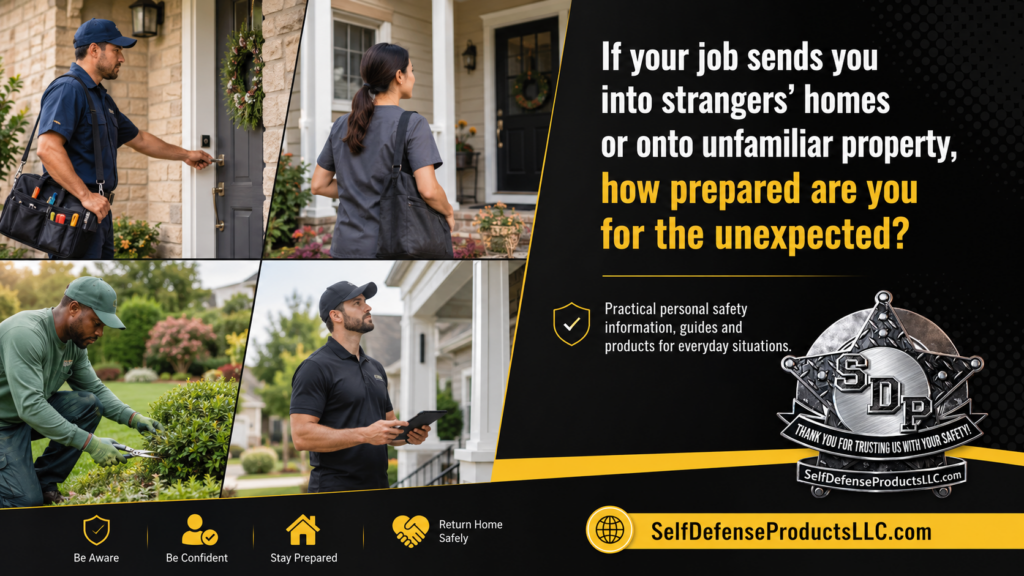
If your job sends you into strangers’ homes or onto unfamiliar property, how prepared are you for the unexpected?
Plumbers, HVAC technicians, electricians, landscapers, delivery workers, home-health workers, inspectors, pest-control workers, and many other service professionals deal with different people, homes, yards, pets, and situations every day.
Most service calls are routine. Still, it makes sense to have a simple safety plan before you arrive. These personal safety tips for service workers can help you build that plan.
Know Where You Are Going
Before entering a property, take a few seconds to look around.
Know where you parked. Notice the easiest way back to your vehicle. Look for gates, fences, pets, poor lighting, or anything else that may affect how you enter or leave.
If something does not feel right, do not ignore it.
Let Someone Know Where You Are
If you work alone, make sure someone knows where you are going and when you expect to finish.
Many companies already use dispatch systems or work-order apps. If yours does not, a simple text message or location-sharing system can help.
The goal is simple: someone should know where you are if you need help.
Ask About Dogs Before You Enter
Before entering a fenced yard or home, ask whether there are dogs on the property and whether they can be secured while you work.
Do not assume a dog is friendly just because the owner says it normally is.
Give the animal space and avoid putting yourself in a tight area where you cannot easily move away.
Keep Your Exit in Mind
When you enter a home, garage, basement, backyard, or other work area, pay attention to how you got there.
Try not to let equipment, furniture, tools, or closed doors block your easiest way out.
You do not need to be nervous. You just need to stay aware of your surroundings.
Avoid Unnecessary Confrontations
You may occasionally deal with an angry customer, neighbor, family member, or other person on the property.
Your job is not to win an argument.
If a situation starts getting heated, create distance when possible and contact your employer, supervisor, security, or law enforcement if needed.
Leaving an unsafe situation is usually better than letting it get worse.
Keep Your Phone Accessible
A phone does not help much if it is buried under tools in your vehicle.
Keep it charged and somewhere you can reach it quickly.
You may also want emergency contacts saved where they are easy to find.
Think About Working After Dark
Nighttime service calls can bring extra problems.
Use a flashlight when needed. Park in a well-lit area when possible. Avoid walking through areas you cannot clearly see.
If you are working beside a road, in a parking lot, or around moving vehicles, use proper visibility gear for the job.
Choose Safety Products Carefully
Some workers choose to carry personal safety products, like pepper spray or a stun gun, while working.
What is appropriate can depend on your job, company policy, location, and local laws.
Before carrying any personal safety product, make sure you understand how it works and whether you are allowed to carry it where you work.
Self Defense Products LLC.com provides practical personal safety information, guides, and products for everyday situations.
Keep a Simple Safety Kit in Your Vehicle
A work vehicle can also carry basic safety and emergency items.
Depending on the job, that might include:
- Flashlight
- Phone charger or power bank
- First-aid kit
- Reflective vest
- Emergency contact information
- Water
- Weather gear
- Basic personal safety equipment allowed by your employer and local laws
You do not need a huge emergency kit. A few useful items are better than having nothing when you need them.
Trust Your Judgment
You work around different people and properties every day.
If something seems wrong, pay attention.
You may notice an unsecured dog, aggressive behavior, poor lighting, someone blocking your exit, or another condition that makes the job feel unsafe.
Sometimes the safest decision is to step away and come back after the situation has been handled.
If you work alone showing homes or inspecting properties, our guide to real estate agent safety has more tips on staying alert.
Bottom Line
Service professionals spend a lot of time in places they do not control.
A little planning can make a difference.
Know where you are going. Stay aware. Keep communication open. Think about your exit. Know your company rules. And carry only the safety equipment that is appropriate and legal for your situation.
For practical personal safety information, guides, and products for everyday situations, visit Self Defense Products LLC.com.
This article provides general safety information and is not legal or workplace safety advice. Follow your employer’s policies and check the laws that apply where you live and work.

