





I have been around self-defense products since the early 90s and selling them since 2008. One of the most common questions I hear is simple: what is a stun gun, and how does it actually work? Here is the honest answer.
How a Stun Gun Works
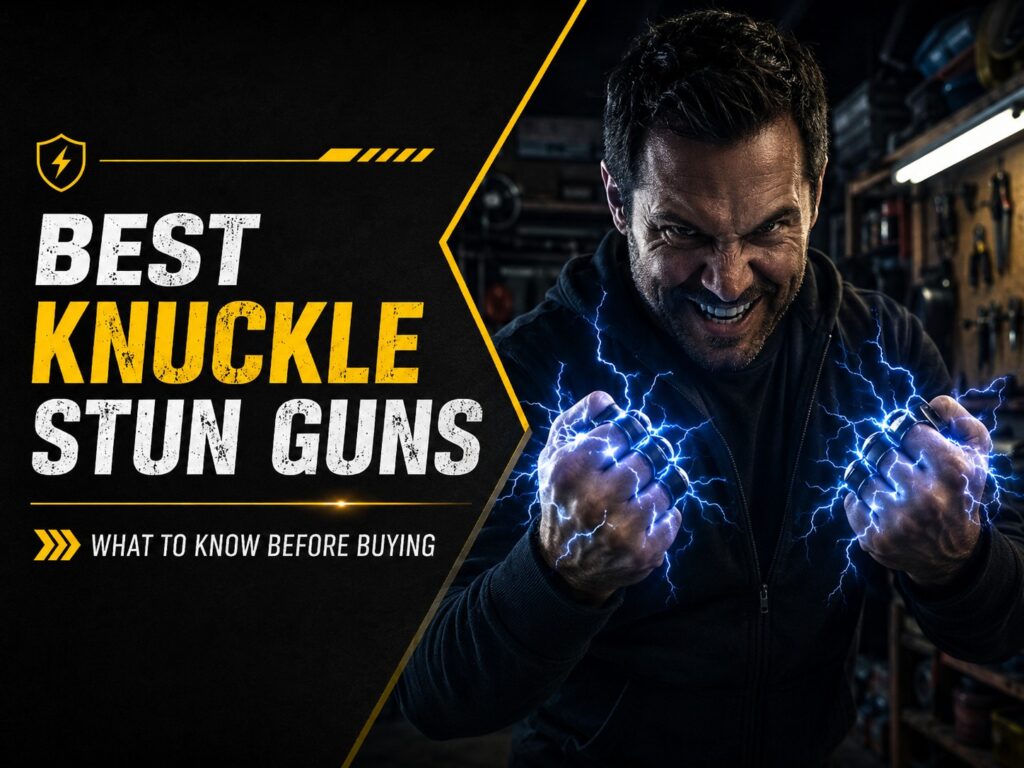
A stun gun is a handheld close-contact device that delivers an electrical charge on direct contact. When the electrodes touch skin or clothing and you activate the trigger the electrical output temporarily disrupts normal muscle function. The person may feel pain, muscle reaction, or enough discomfort to give you a chance to move away.
The goal is to create a chance to move away, create distance, or call for help.
The most important thing to understand is that a stun gun requires direct contact. There is no range. You have to be close to the person for it to work. That is why situational awareness matters even more when you carry a stun gun. Pepper spray gives you distance. A stun gun does not.
Stun Gun vs TASER: Not the Same Thing
People use these terms as if they mean the same thing. They do not.
A stun gun requires direct contact. You touch the device to the person. A TASER fires two small probes on thin wires that deliver the charge from a distance. TASER is a brand name, not a product type. Most civilian devices sold as stun guns are contact devices, not projectile devices.
If someone tells you they want something that works from a distance they are describing a TASER-style device, not a standard stun gun. Know what you are buying before you buy it.
The Voltage Conversation
Walk into any store and you will see stun guns with enormous numbers on the box. 10 million volts. 18 million volts. 28 million volts. Those numbers get attention.
Voltage alone does not tell the whole story. The actual performance of a stun gun depends on multiple factors including output quality, battery charge, device design, and how securely you can hold and operate it under stress.
I explain this more here: Stun Gun Voltage Claims – What Those Numbers Actually Mean
No Self-Defense Tool Is a Guarantee
This is something most retailers will not tell you. A stun gun is one layer of protection. It is not a guarantee. Someone under the influence of drugs or alcohol may respond differently. Thick clothing can reduce effectiveness. Every situation is different.
A stun gun can be part of a layered approach. Awareness comes first. Distance matters. Pepper spray gives you space if it is available and legal where you live. A stun gun is a close-range option when someone is already too close.
Who Uses Stun Guns
Stun guns are popular with women who walk or run alone, night shift workers, late commuters, security professionals who need a backup option, and anyone who wants a layered approach to personal protection.
They can last a long time if they are charged, tested, and stored properly. They do not need to be aimed as precisely as pepper spray. Those are real considerations for everyday carry.
Know Your State Laws Before You Buy
Stun gun laws vary by state and city. Some states have age restrictions. Some have permit requirements. Some restrict where you can carry them. Do not assume it is legal where you live. Check first.
Our Stun Gun Laws by State guide can help you check your state before ordering.
Browse Our Stun Gun Selection
We carry stun guns for everyday carry, home defense, and specific situations. Here are some good places to start:
Read More About Stun Guns
- Stun Gun Authority Guide – start here if you are new to stun guns
- Stun Gun Voltage Claims – do not buy just because the number is big
- Stun Gun Laws by State – check your state before you buy
Frequently Asked Questions
What is a stun gun?
A handheld close-contact device that delivers an electrical charge on contact. It may cause pain, muscle reaction, or enough discomfort to give you a chance to move away. It requires direct contact with the person to work.
What is the difference between a stun gun and a TASER?
A stun gun requires direct contact. A TASER fires two probes on wires from a distance. TASER is a brand name. Most civilian stun guns are contact devices.
Does higher voltage mean a better stun gun?
Voltage alone does not tell the whole story. Actual performance depends on output quality, battery charge, device design, and how well you can hold it under stress. Read our voltage claims guide for the full breakdown.
Are stun guns legal?
Laws vary by state and city. Always check your local laws before purchasing. Our Stun Gun Laws by State guide covers every state.
Do stun guns work on everyone?
No self-defense tool works the same way on every person in every situation. A stun gun is one layer of protection, not a guarantee. Awareness and distance are always your first line of defense.
What should I look for when buying a stun gun?
A comfortable grip, a safety mechanism, a real brand with a track record, and legal status in your state. Do not buy based on voltage numbers alone.
This guide is for general educational purposes only. Stun gun laws vary by state and locality. Always verify legal carry in your jurisdiction before purchasing. Self Defense Products LLC makes no warranties about specific outcomes from use of any product. Use any self-defense tool responsibly and only when genuinely necessary. You must be 18 or older to purchase.

