









Trying to decide between a door stop alarm and a regular door alarm before your next trip? Both can help you feel more prepared when staying in a hotel, Airbnb, or vacation rental. But they work differently, and buying the wrong one could leave you with something that doesn’t fit your door.
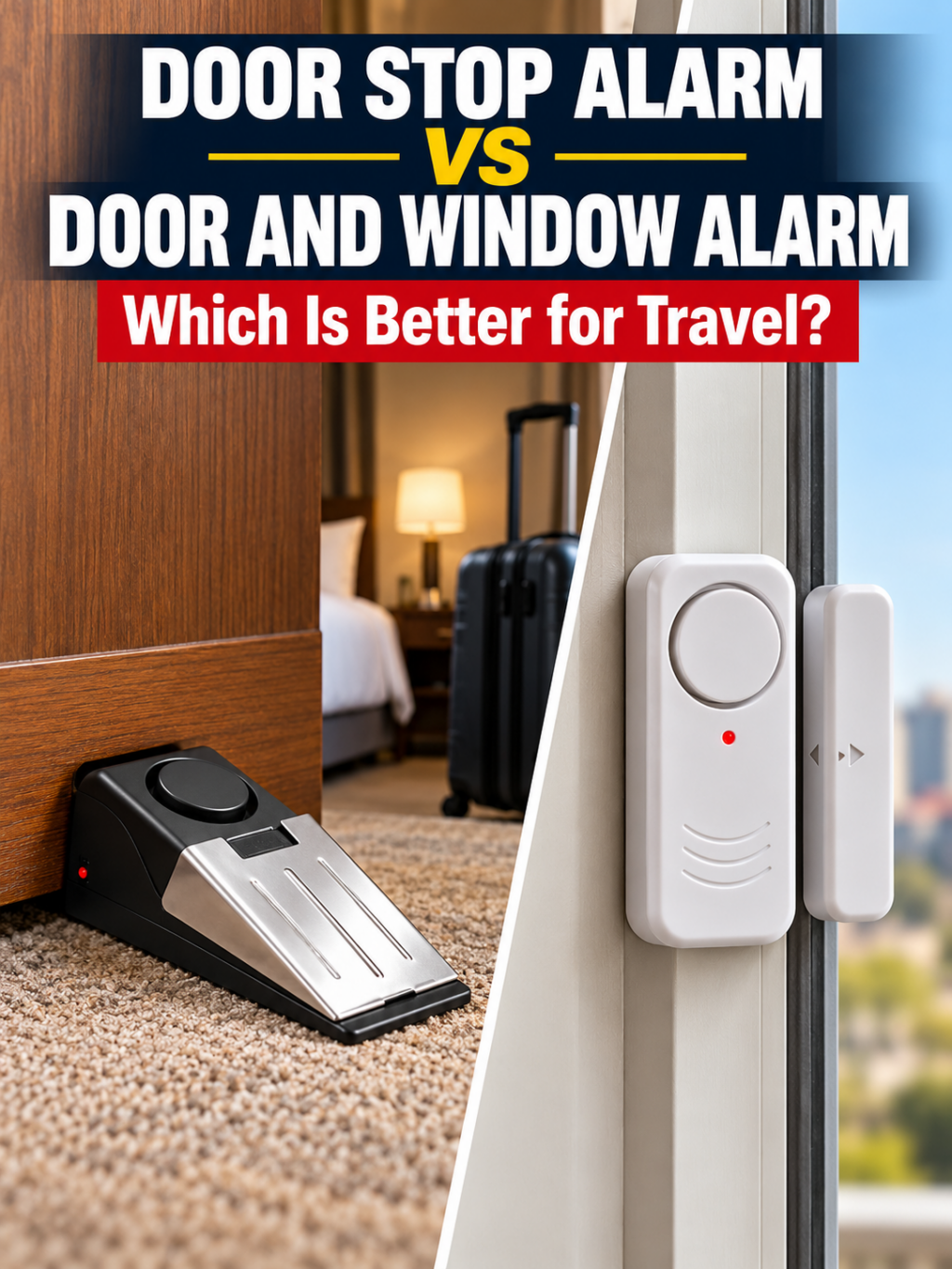
A door stop alarm sits on the floor and sounds when someone pushes against the door. A magnetic door alarm uses two pieces that separate when a door or window opens.
So which one should you buy? Let’s compare them before you spend your money.
Door Stop Alarm vs Door Alarm: What’s the Difference?
The biggest difference is how these alarms detect movement.
A door stop alarm uses pressure against a wedge placed underneath a door. A magnetic alarm uses a sensor that detects when the door or window moves away from its frame.
Here’s a quick comparison of the two alarms sold by Self Defense Products LLC.
| Feature | Door Stop Alarm | Magnetic Door Alarm |
|---|---|---|
| Alarm volume | 120dB | 90dB |
| How it works | Pressure on wedge | Magnetic separation |
| Installation | Place under door | Peel and stick |
| Physical resistance | Yes, limited | No |
| Window protection | No | Yes |
| Number included | 1 | 2 |
1. Door Stop Alarm 120dB: A Simple Choice for Travel
The Door Stop Alarm 120dB for Travel and Home is a small wedge that sits underneath an inward-opening door.
When someone tries to push the door open, pressure on the wedge activates the alarm.
The wedge also creates some resistance against the door. However, it is not a replacement for a proper door lock.
Why Choose a Door Stop Alarm?
- 120dB alarm rating
- No drilling or permanent installation
- Easy to pack in a suitcase
- Adds some resistance against an inward-opening door
- No monthly monitoring fee
One of the biggest advantages is that you can take it out of your bag, position it under a suitable door, and remove it when you’re ready to leave.
That makes it worth considering for travelers who don’t want to attach anything permanently to a hotel room.
When a Door Stop Alarm Might Not Work
Not every door is a good fit.
Door stop alarms generally require a door that opens inward toward the room. The gap underneath the door and the type of flooring also matter.
A thick carpet, an unusually large gap, or a door that opens outward can prevent the wedge from working properly.
Always test the alarm before relying on it, and make sure it can be removed quickly in an emergency.
Interested in this alarm? Take a closer look at our Door Stop Alarm 120dB for Travel and Home to see its features and current availability.
2. Portable Door and Window Alarm 90dB: More Ways to Use It
The Portable Door & Window Alarm 90dB is different because it uses a magnetic sensor instead of a floor wedge.
It comes in a two-pack, allowing you to monitor two suitable doors or windows.
One piece attaches to the door or window, and the other attaches to the frame. When the two pieces move apart while the alarm is armed, the alarm sounds.
It doesn’t physically block someone from opening the door. Its job is to make noise and alert you when an entry point opens.
Why Choose a Magnetic Door Alarm?
- 90dB alarm rating
- Two alarms included
- Can be used on compatible doors and windows
- Peel-and-stick installation
- No professional installation required
- No monthly subscription
For someone staying in an apartment, vacation rental, or temporary housing, having two alarms may be more useful than having just one.
You could monitor a door and a window, provided both have suitable surfaces and enough room for proper sensor placement.
What Should You Check Before Buying?
Magnetic alarms require proper alignment between the sensor and the magnet.
Some doors have molding, unusual frames, or surfaces that make installation difficult.
Also, think about whether you want to use adhesive on a hotel door or rental property. Even removable adhesive can sometimes leave residue or damage certain finishes.
Always check the property rules before attaching anything.
Want to monitor more than one entry point? Check out our Portable Door & Window Alarm 90dB Two-Pack to learn more about its features and current availability.
3. Which Door Alarm Is Better for Hotel Rooms?
If you’re staying in a hotel for a few nights, start by looking at the door itself.
Does it open inward? Is there enough clearance underneath it? Will a wedge stay in place on the floor?
If the answer is yes, a door stop alarm might be the easier option because it doesn’t require adhesive.
But if the door has an unusual gap or the wedge cannot sit securely, a magnetic or other portable alarm may be a better option, provided it can be installed correctly.
Remember that most hotels already have door locks, deadbolts, or security latches.
Your portable alarm should be an extra layer of awareness, not a replacement for the security equipment already installed.
Never use a device in a way that prevents you or someone else from leaving quickly during a fire or another emergency.
4. Which Alarm Is Better for Apartments and Renters?
For everyday apartment use, a magnetic door and window alarm may be the better option.
With a two-pack, you can monitor two separate entry points instead of just one.
You also don’t need to remember to place a wedge under the door every night.
Once properly installed and armed, the magnetic alarm can stay in position.
However, if you want something temporary that you can take with you when you move, the door stop alarm has an advantage because it doesn’t require mounting.
Both options have their place. It depends on your door, your living situation, and what you’re trying to accomplish.
5. Does a Louder Alarm Mean Better Protection?
Not necessarily.
Our door stop alarm is rated at 120dB, while the magnetic door alarm is rated at 90dB.
That is a difference in the manufacturers’ sound ratings, but volume isn’t the only thing you should consider.
An alarm that fits properly, activates when needed, and is easy to use is more important than buying something based only on the number printed on the package.
A 120dB alarm that doesn’t fit under your hotel door won’t do you much good.
And a 90dB alarm that isn’t installed or armed correctly cannot provide the warning you expect.
Don’t forget that loud alarms can also be uncomfortable at close range. Avoid testing one next to your ears.
6. Can You Travel With Both Alarms?
Both alarms are small, portable security products that don’t need a monthly subscription or an internet connection.
Before flying, check current airline and TSA battery rules for the specific batteries installed in your alarms.
If you’re staying in a hotel, make sure the device doesn’t interfere with emergency exits or violate property rules.
For more information about choosing safety tools for your trips, read our Best Legal Self-Defense Tools for Travel and Walking guide.
7. Which Door Alarm Should You Buy?
Here’s how to narrow it down.
Choose the 120dB Door Stop Alarm If:
- You want a portable alarm for an inward-opening door.
- You don’t want to install anything with adhesive.
- You want an alarm that also adds some physical resistance.
- You need something convenient for occasional travel.
Choose the 90dB Magnetic Door and Window Alarm If:
- You want to monitor both doors and windows.
- You need two alarms instead of one.
- You plan to use the alarms regularly in an apartment or rental.
- You have suitable surfaces for proper sensor installation.
Neither product is automatically the best choice for everyone.
For a short hotel stay with a compatible inward-opening door, the wedge alarm may be more convenient.
For an apartment with multiple entry points, the magnetic two-pack may be a better fit.
Ready to compare your options? View the 120dB Door Stop Alarm or the 90dB Magnetic Door and Window Alarm Two-Pack to see which one fits your needs.
Frequently Asked Questions
Do door stop alarms really work?
A properly positioned door stop alarm can sound when pressure is applied to its wedge. It can also add limited resistance against an inward-opening door. However, its performance depends on the door, floor, and correct placement.
Can a door stop alarm be used on an outward-opening door?
Generally, no. A standard wedge-style door stop alarm is designed for a door that opens inward toward the wedge.
Will a magnetic door alarm work on hotel doors?
It may work on a compatible hotel door if the sensor and magnet can be positioned correctly. However, you should check hotel rules before using adhesive-mounted equipment.
Which alarm is louder, 90dB or 120dB?
A 120dB rating is louder than a 90dB rating under comparable measurement conditions. Actual sound levels can vary depending on the product, surroundings, and measurement distance.
Do portable door alarms need Wi-Fi?
No. The two standalone alarms discussed here use batteries and do not require Wi-Fi or a monthly monitoring service.
Can I use a door stop alarm in an Airbnb?
Possibly, if the door and flooring are compatible and the device can be removed immediately. Check the property’s rules and never interfere with safe emergency exit.
Should I buy both a door stop alarm and a magnetic door alarm?
You can use both if they fit your needs. For example, a door stop alarm may provide an alert and some resistance at an inward-opening door, while a magnetic alarm can monitor another suitable entry point. Always test each device separately.
Final Thoughts
A door stop alarm and a magnetic door alarm might seem like they do the same thing, but they’re built for different situations.
One sits under the door and reacts to pressure. The other monitors movement between a door or window and its frame.
Before buying, look at where you’ll use it, how it attaches, and whether you’ll be able to set it up correctly.
Our company, Self Defense Products LLC, believes safety starts with awareness, preparation, and making smarter choices every day.
Thank you for trusting us with your safety.

